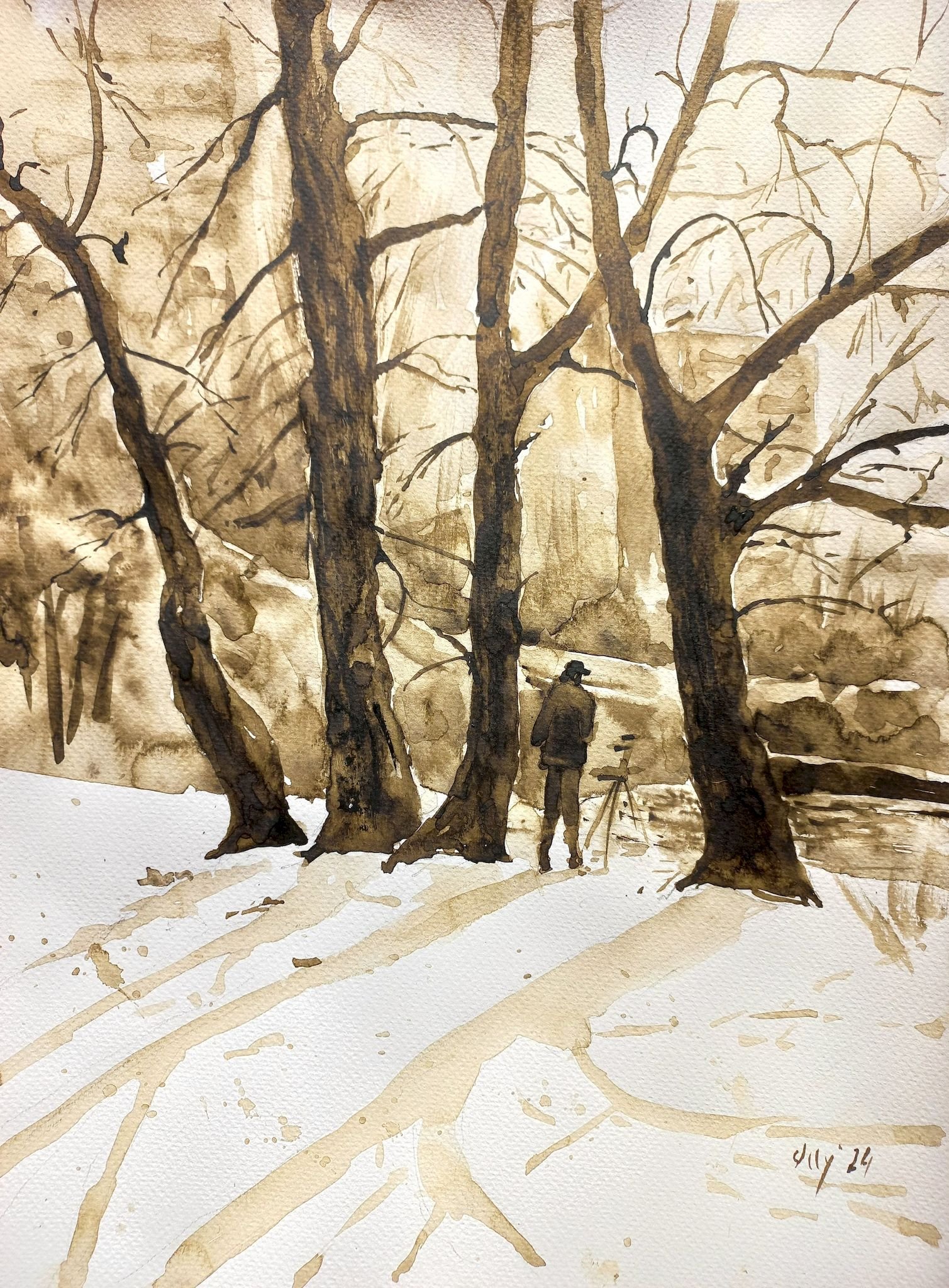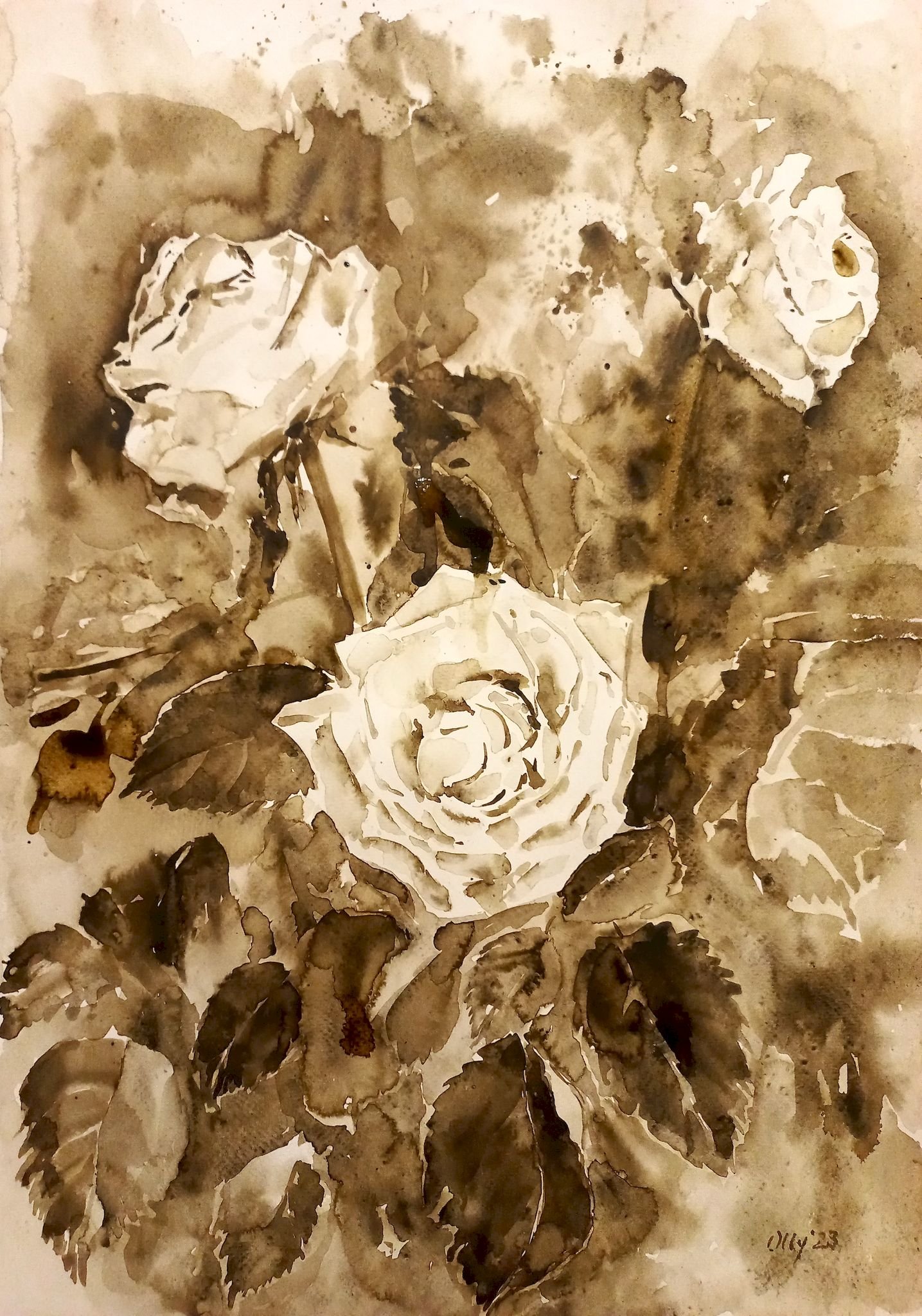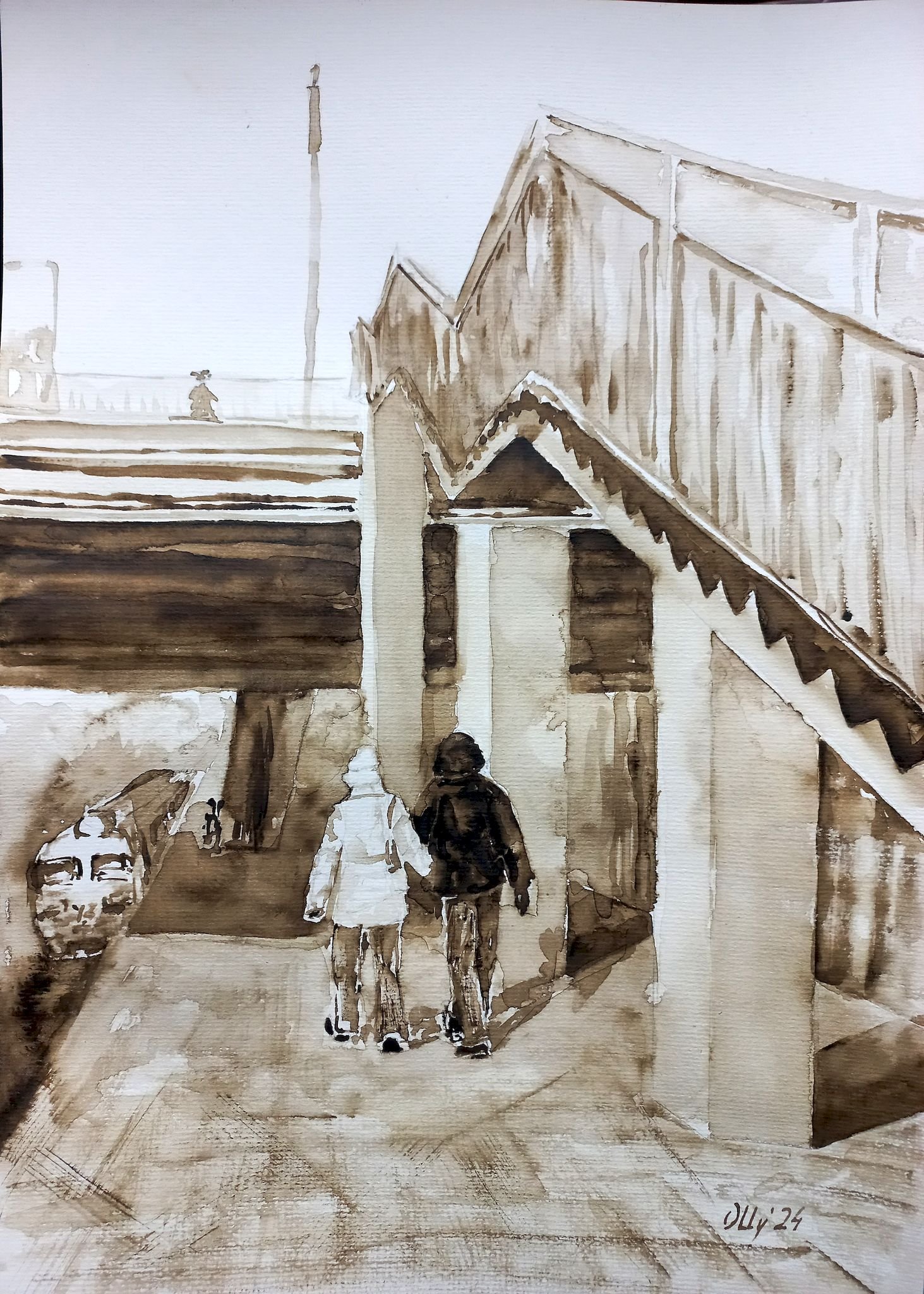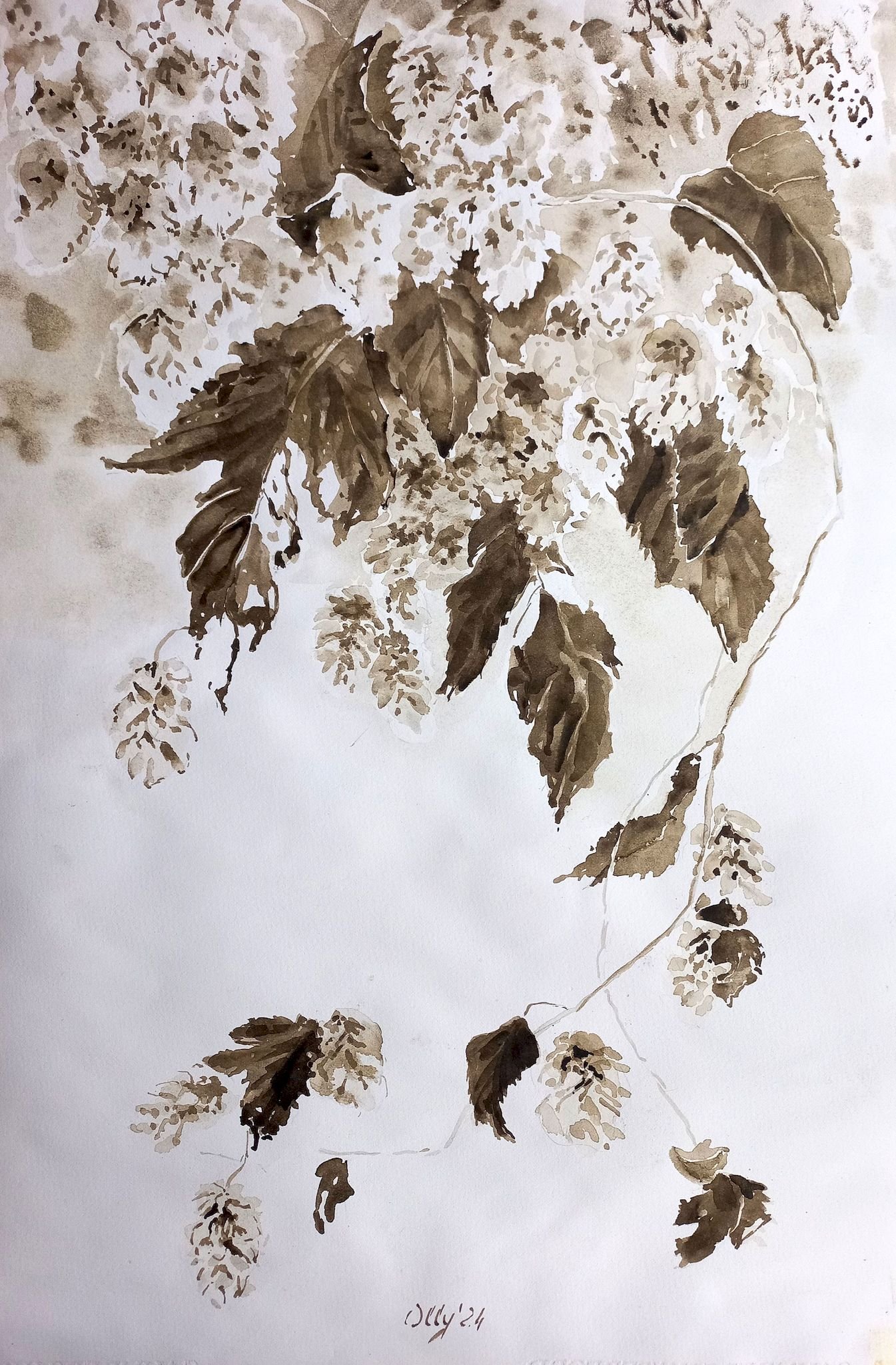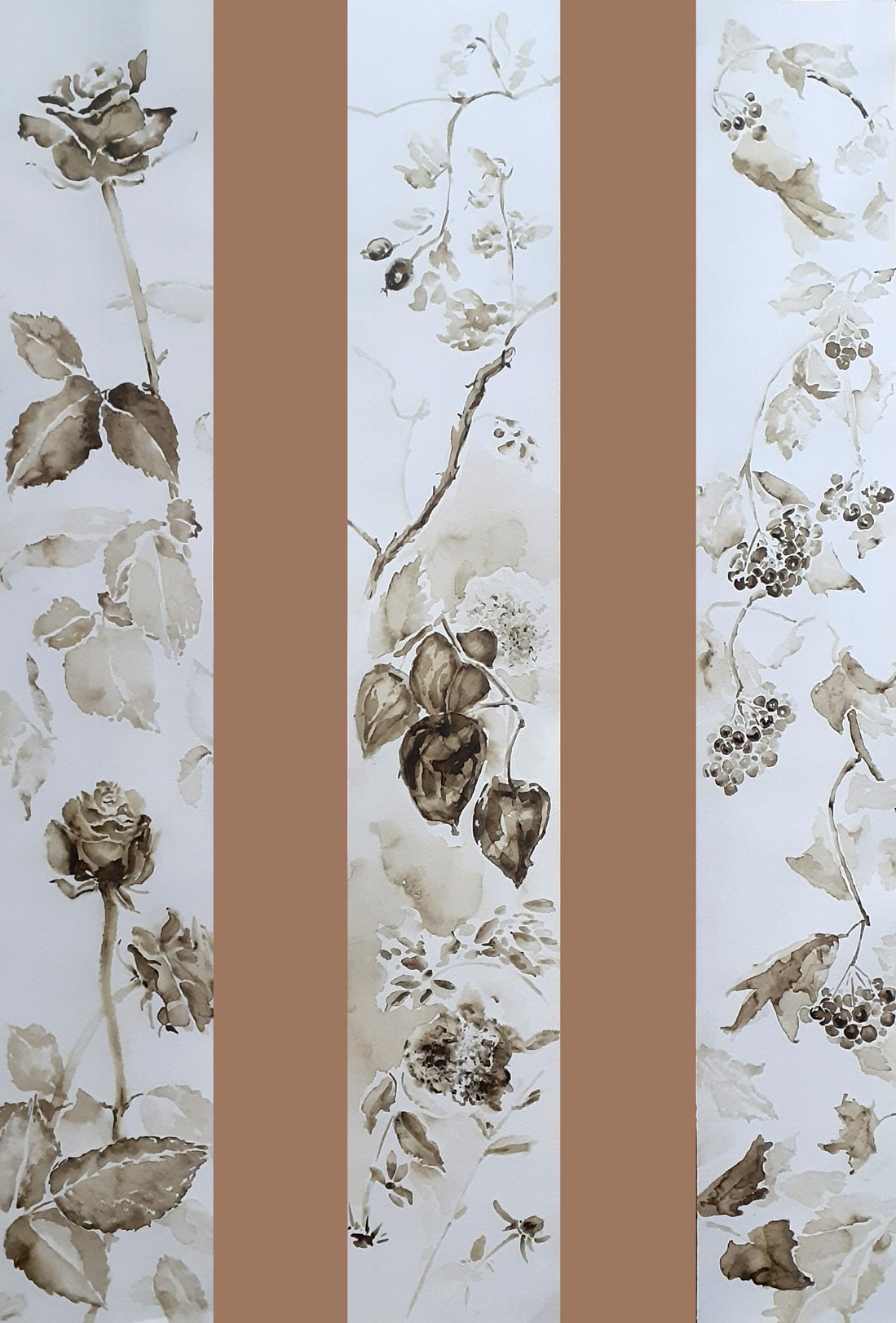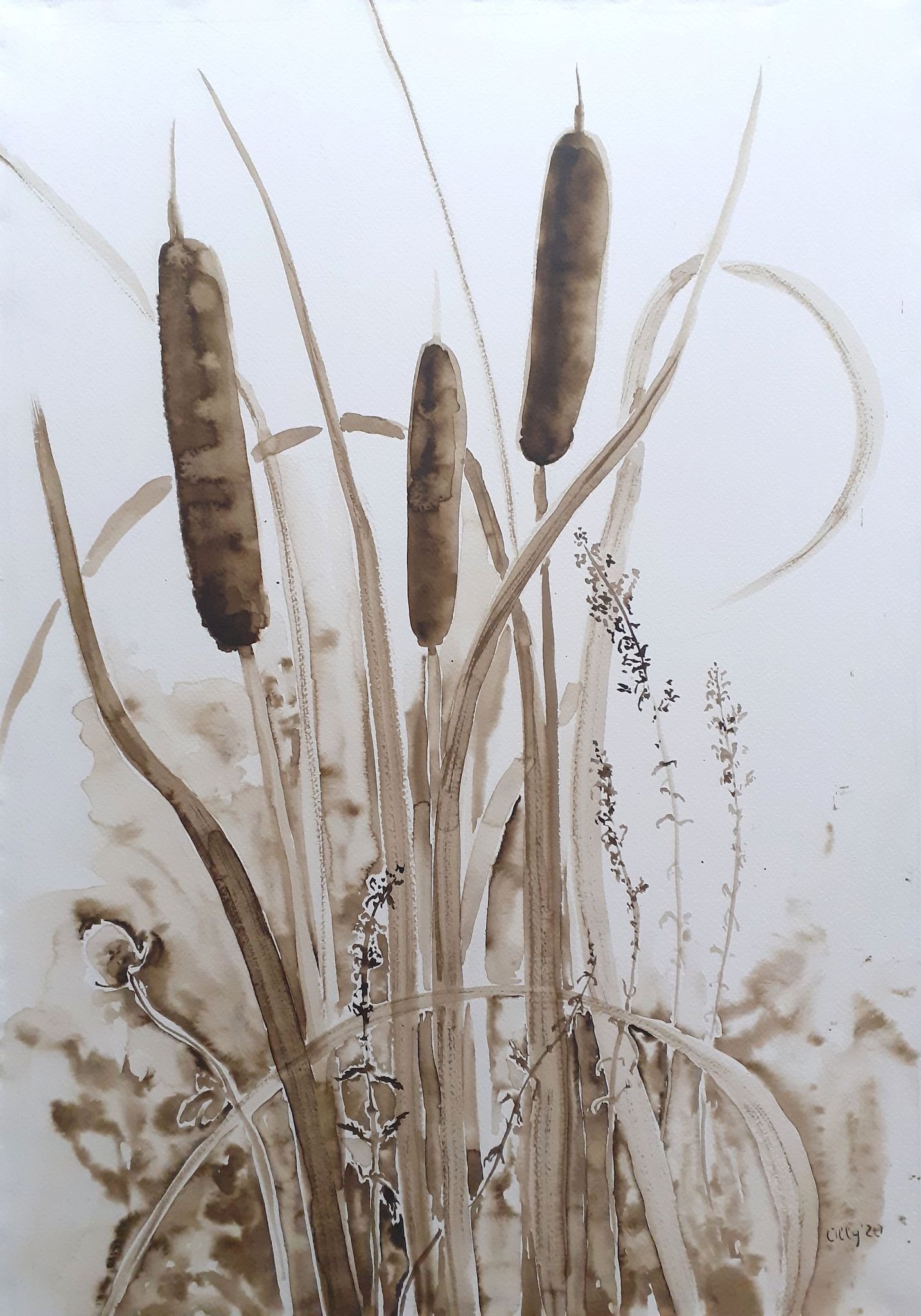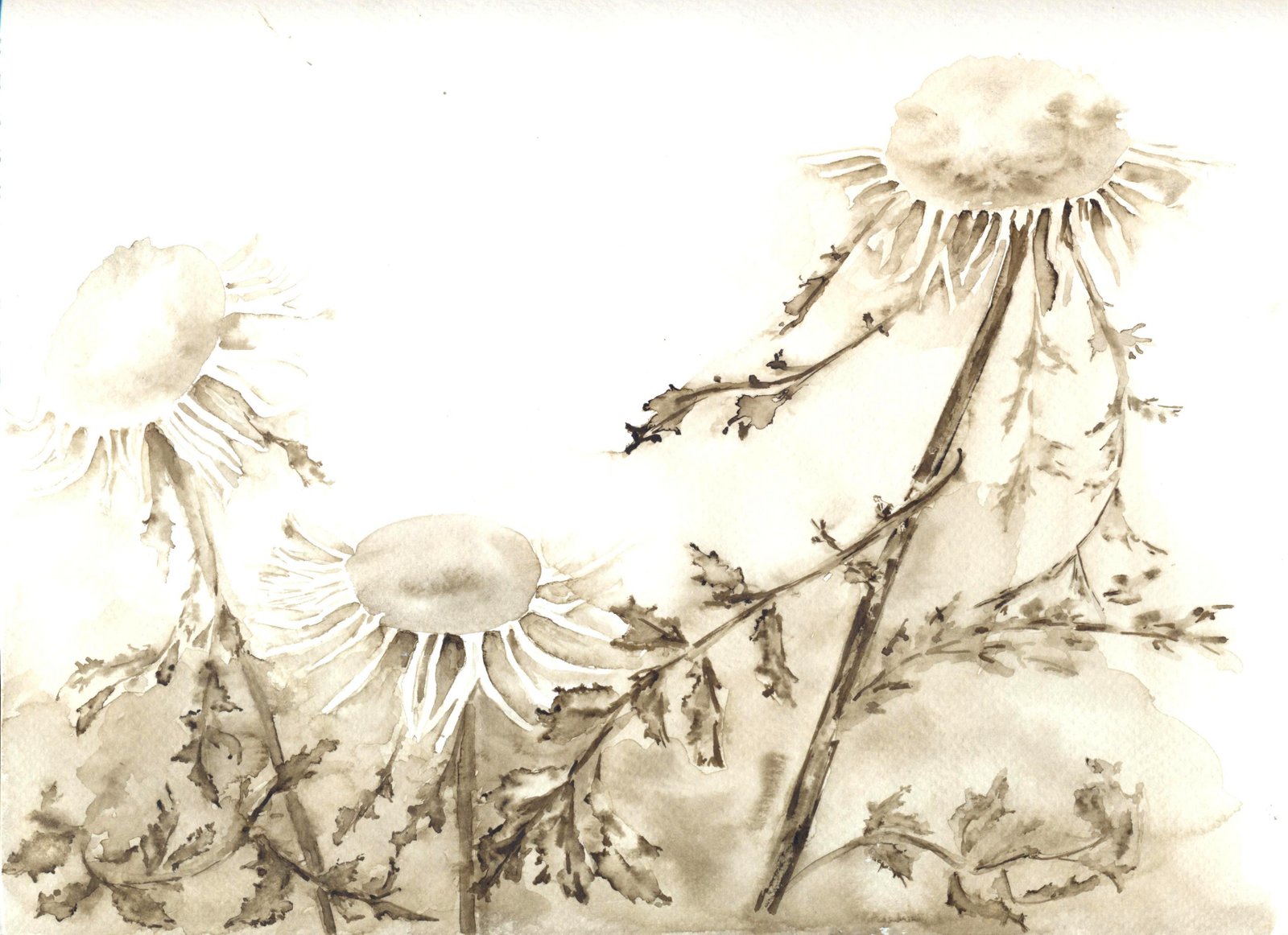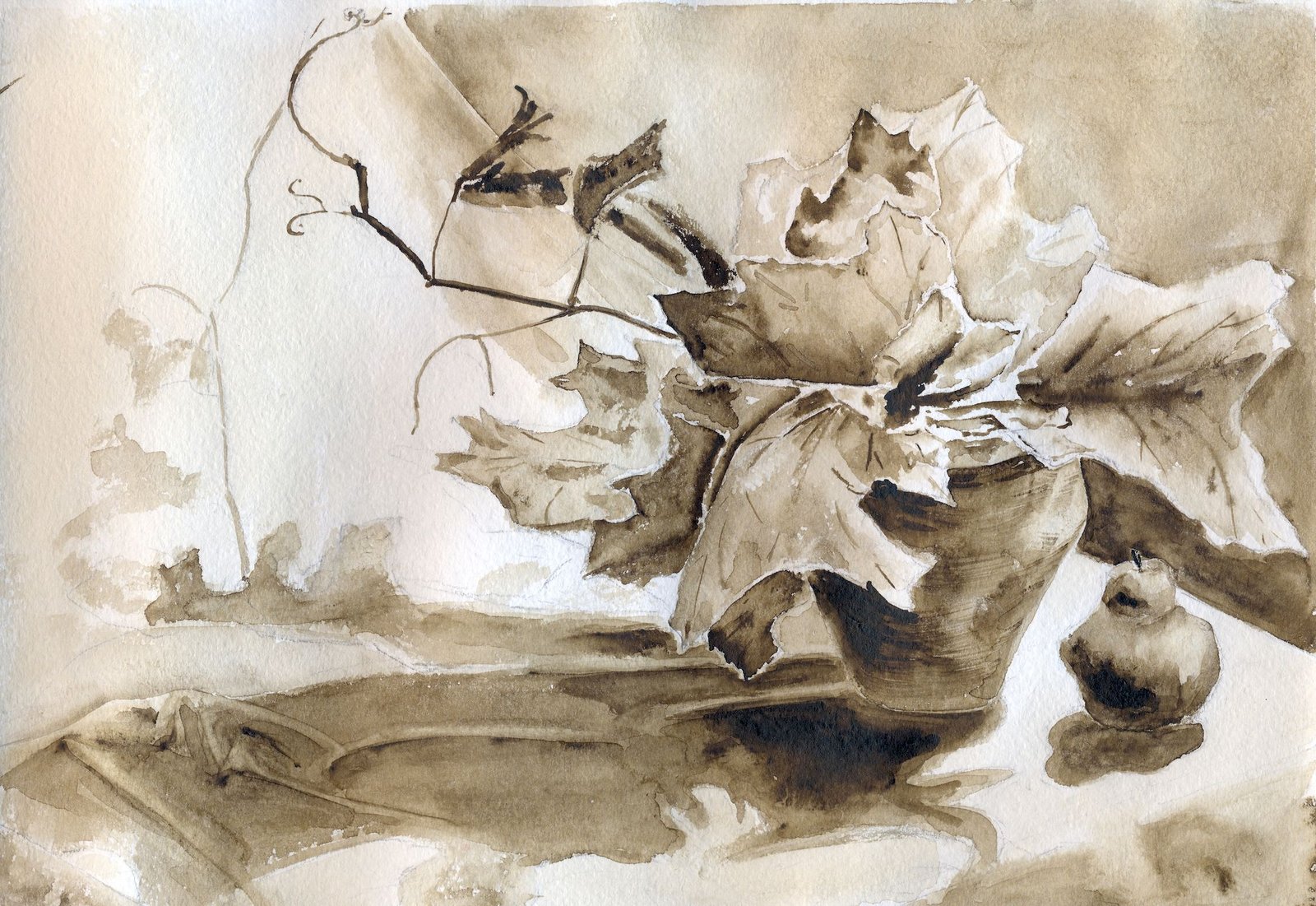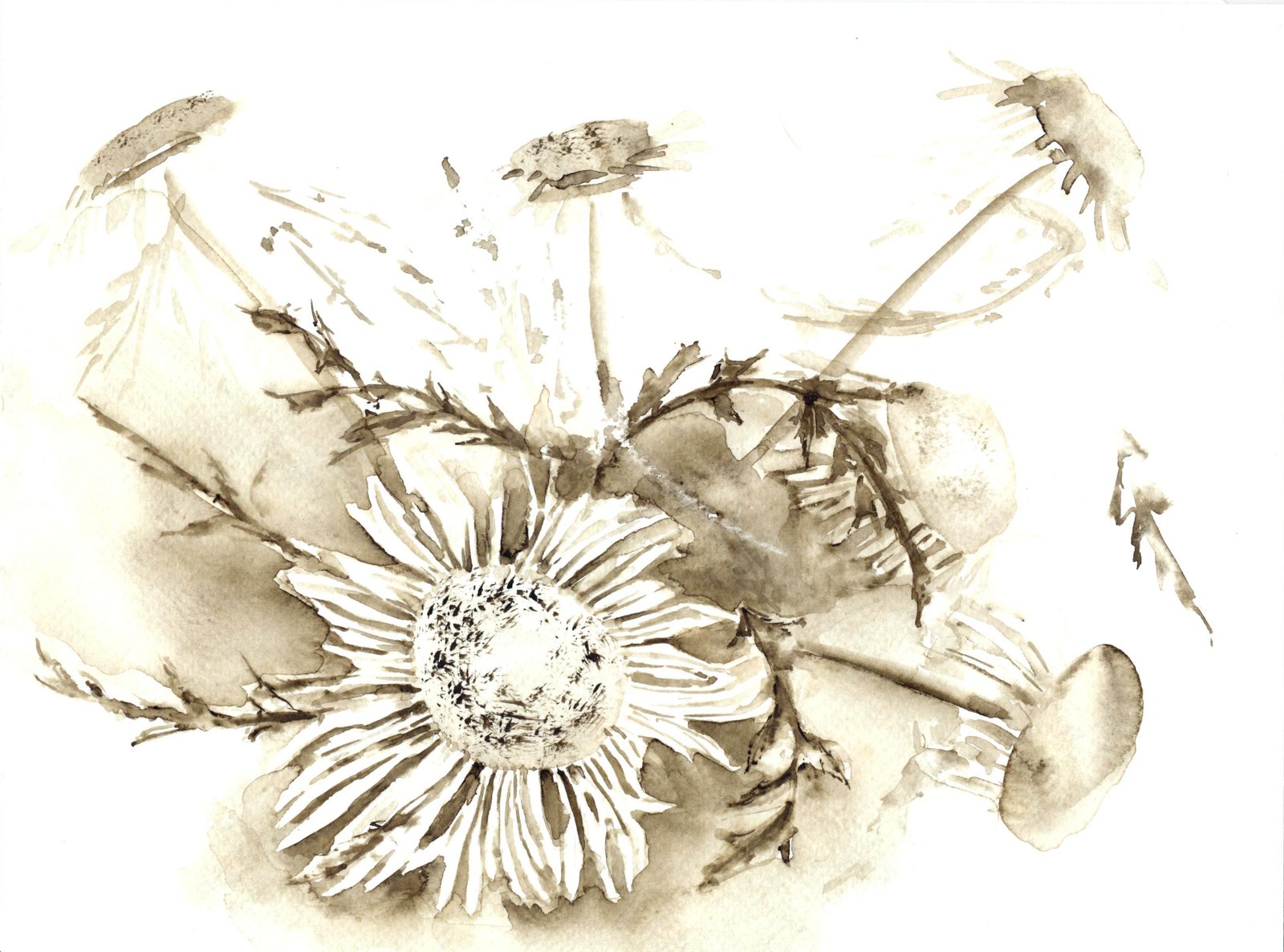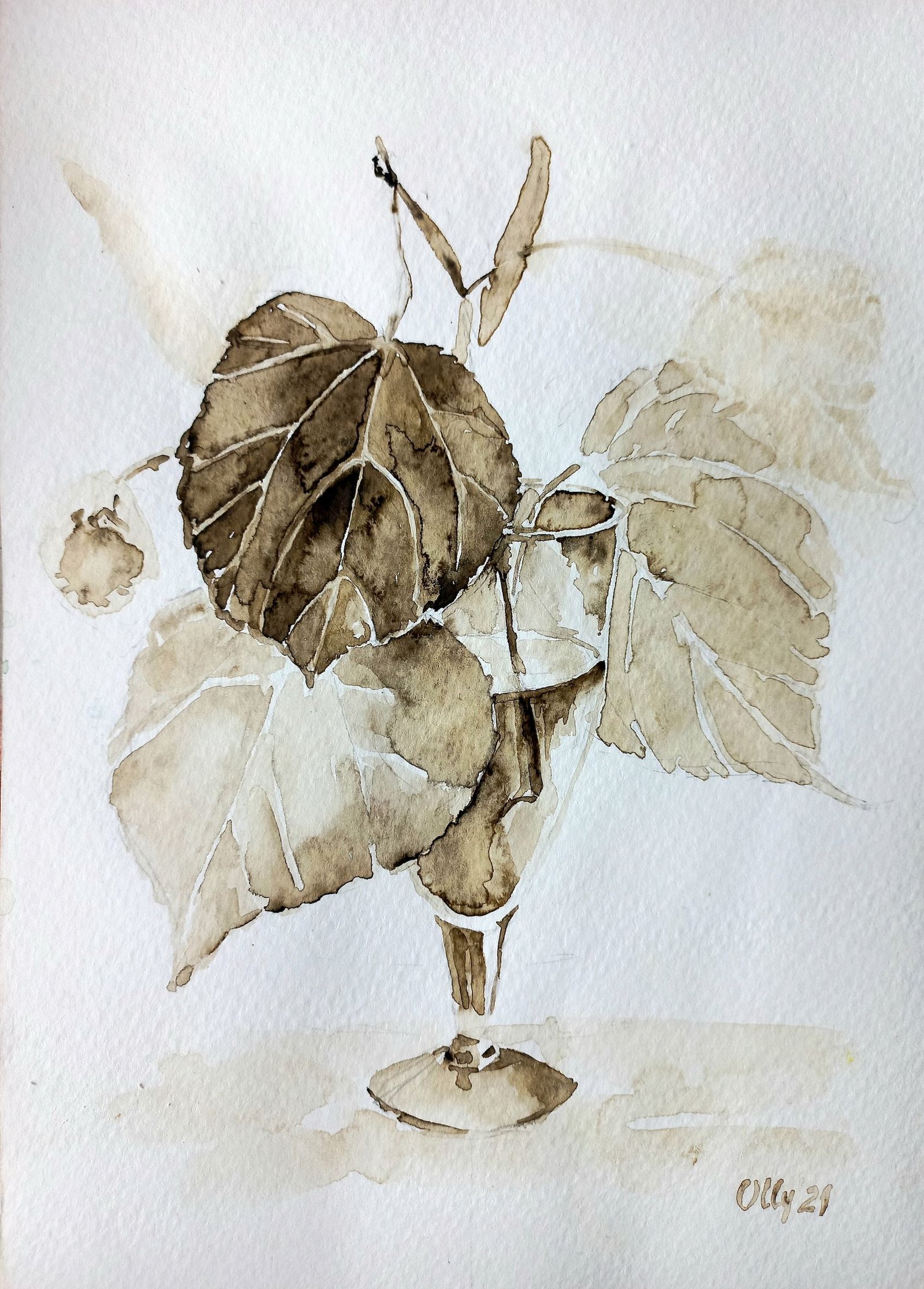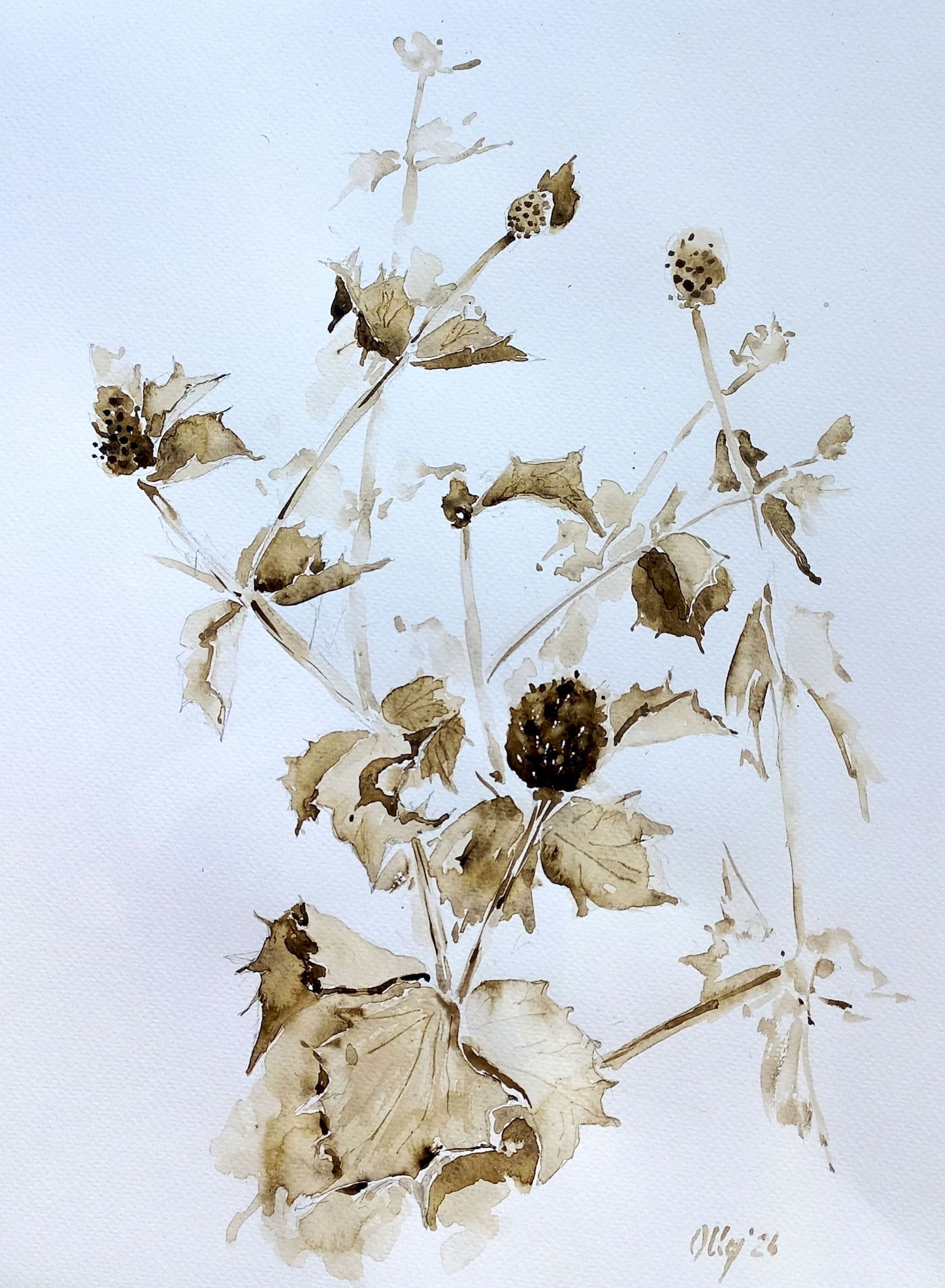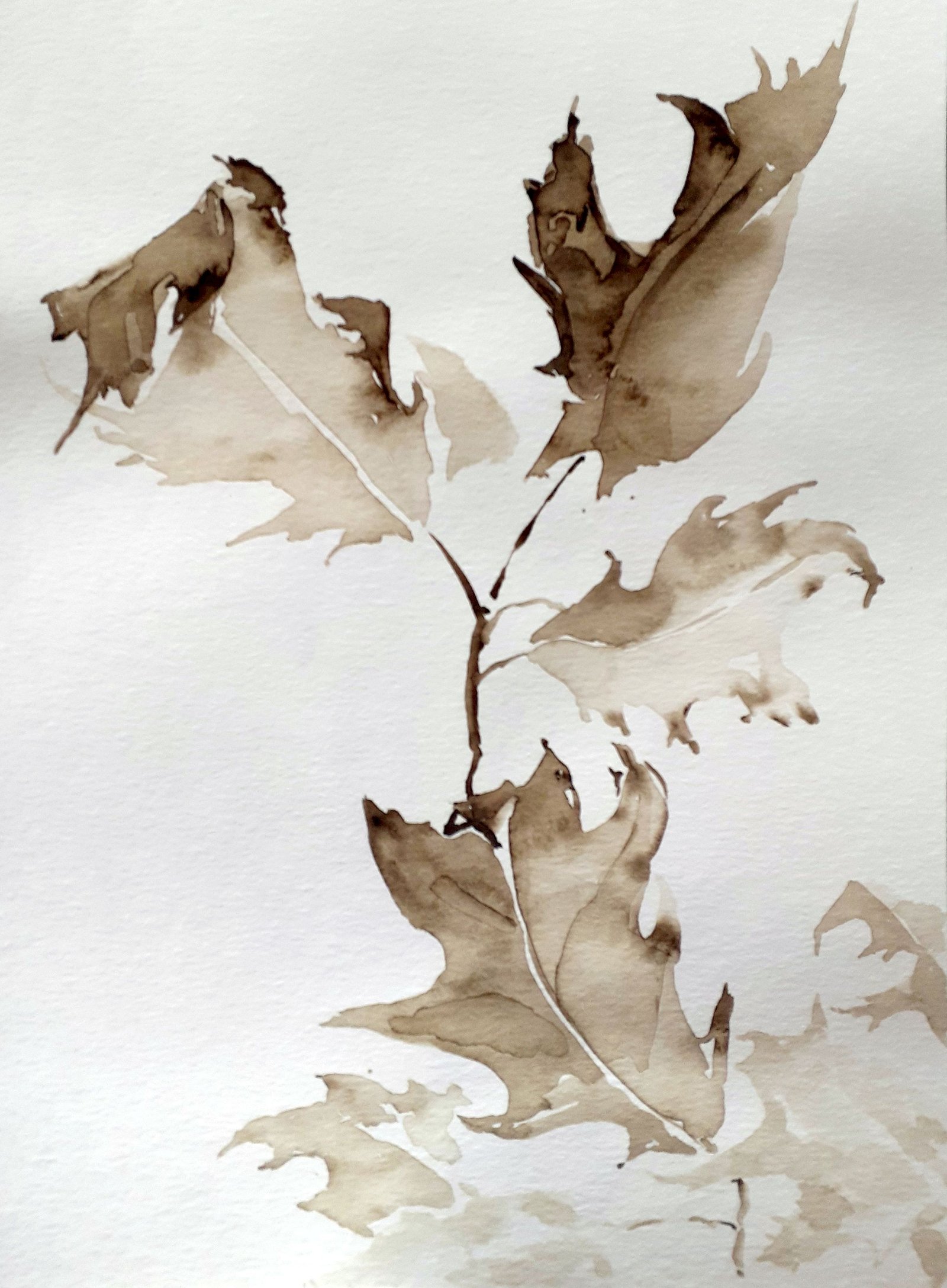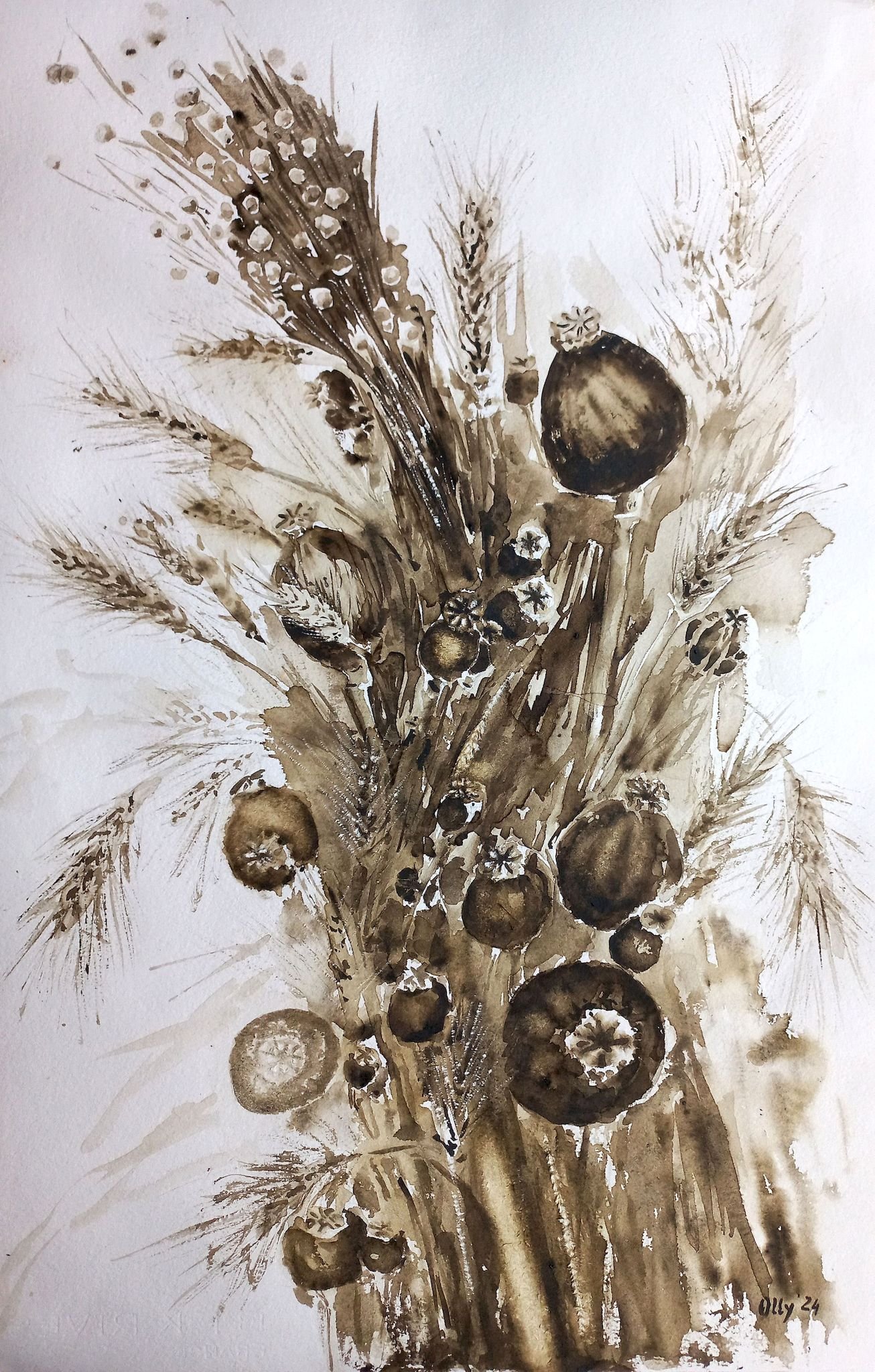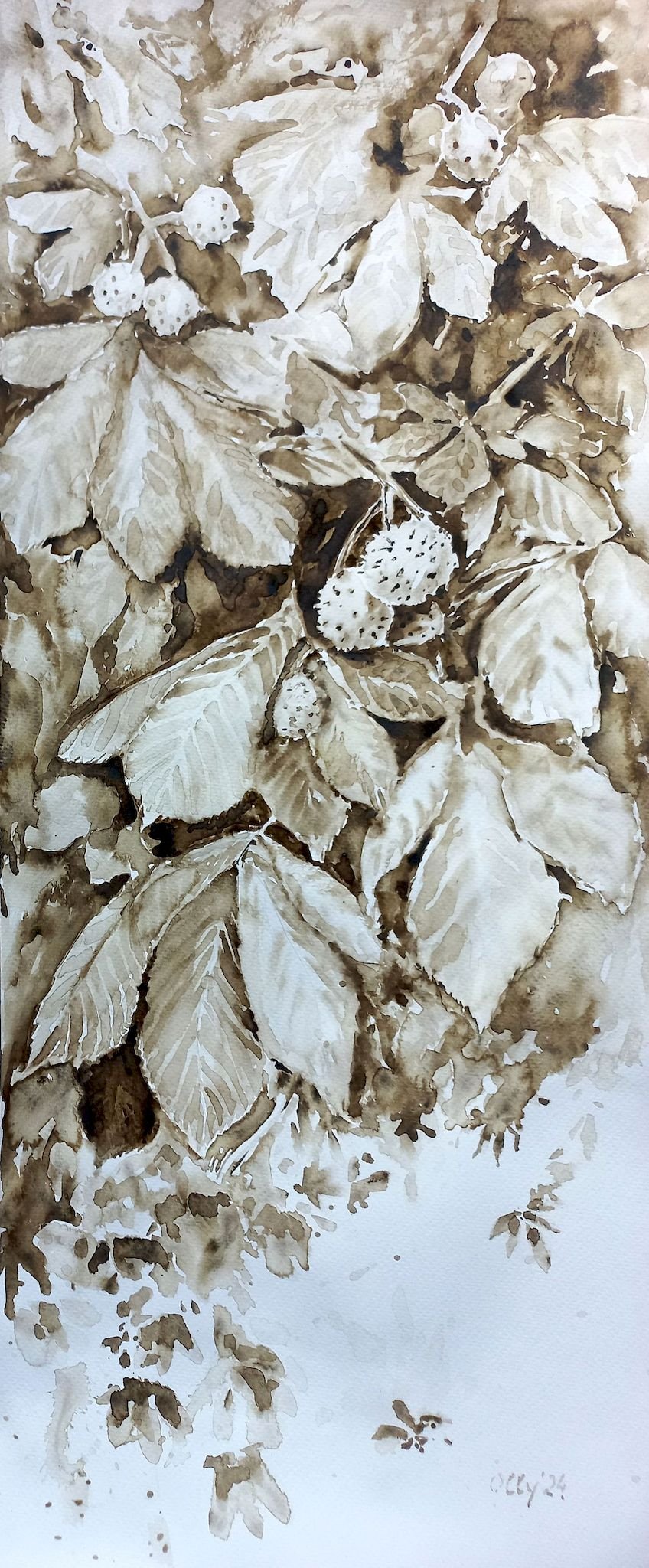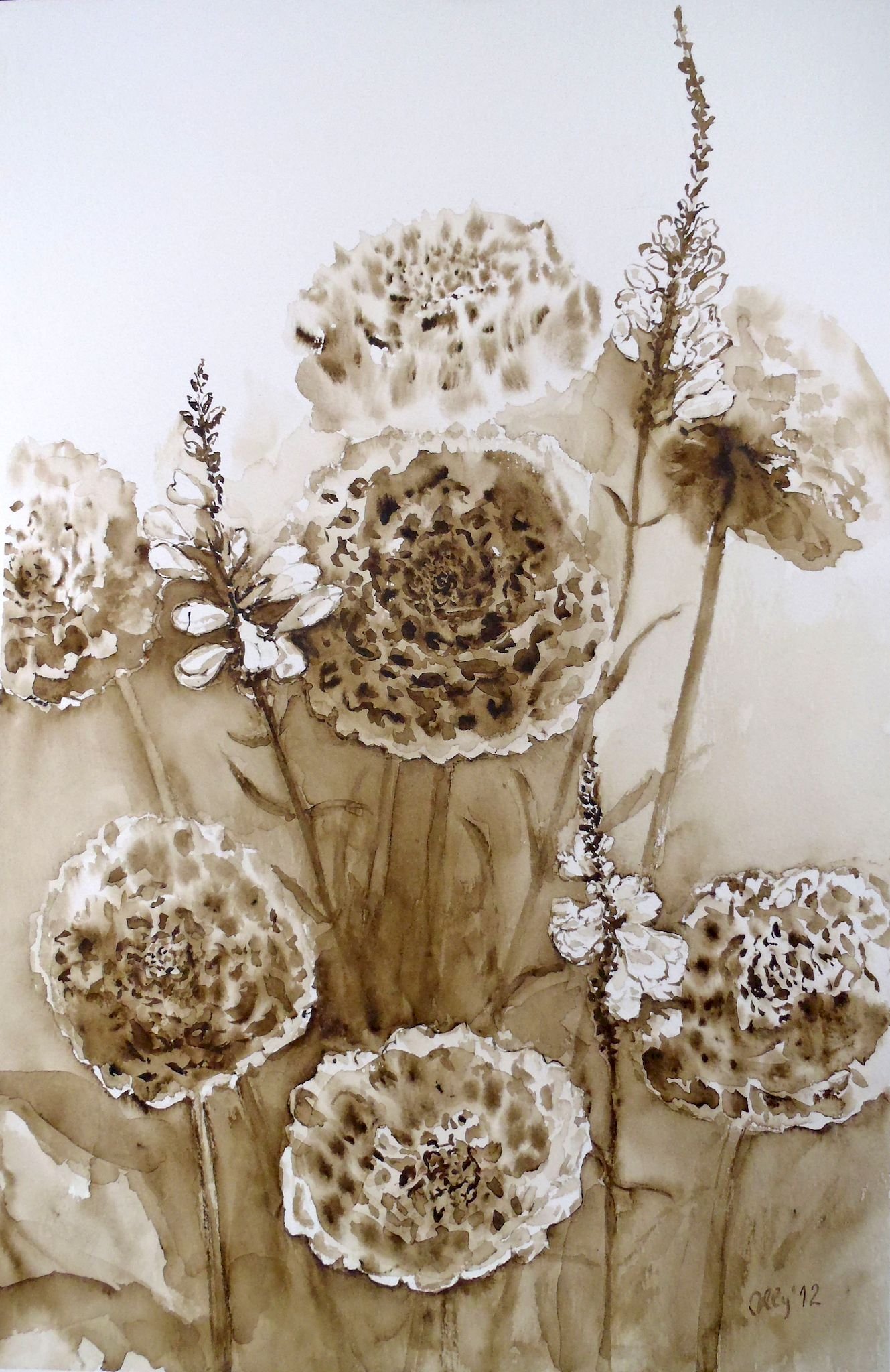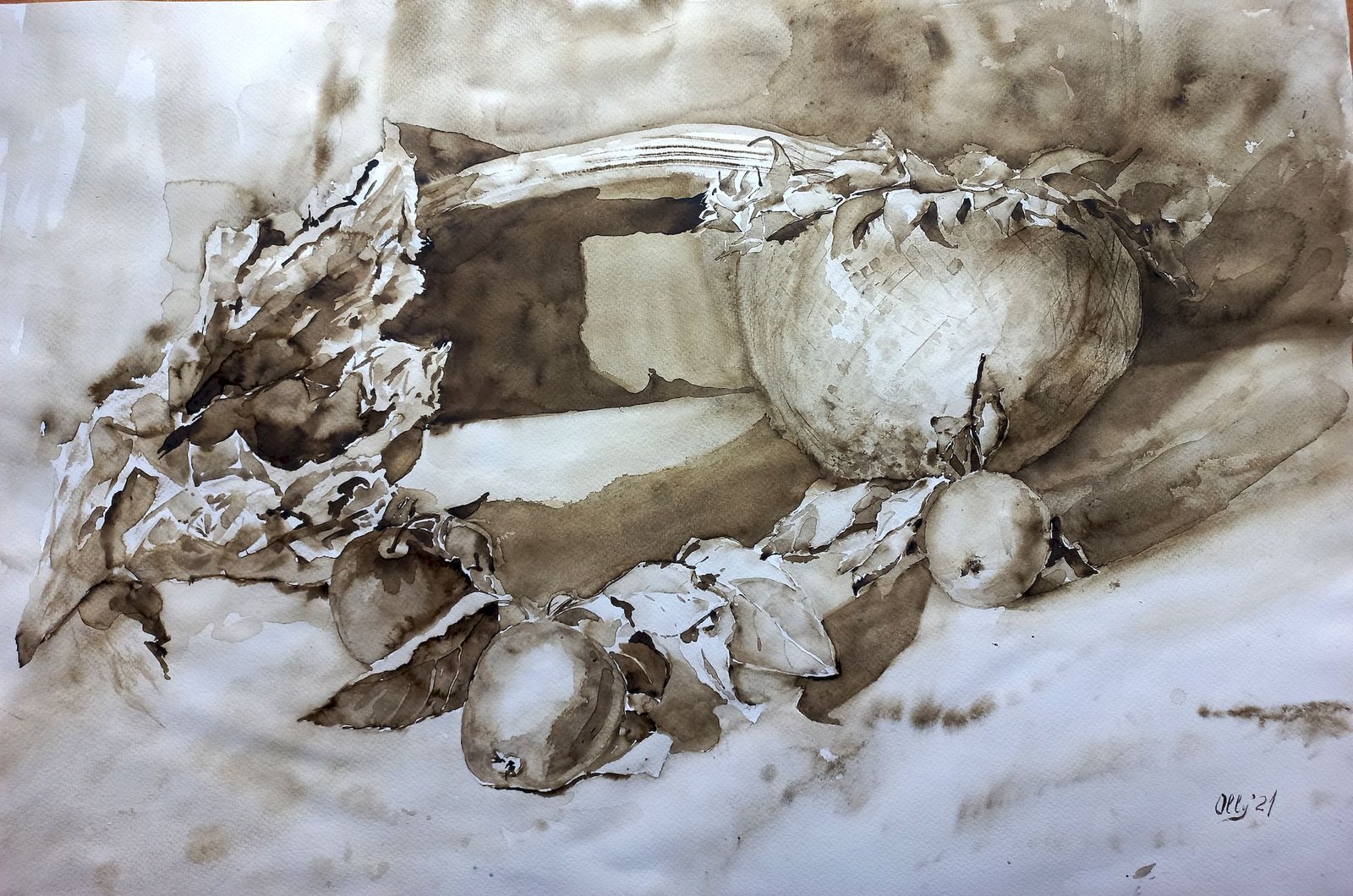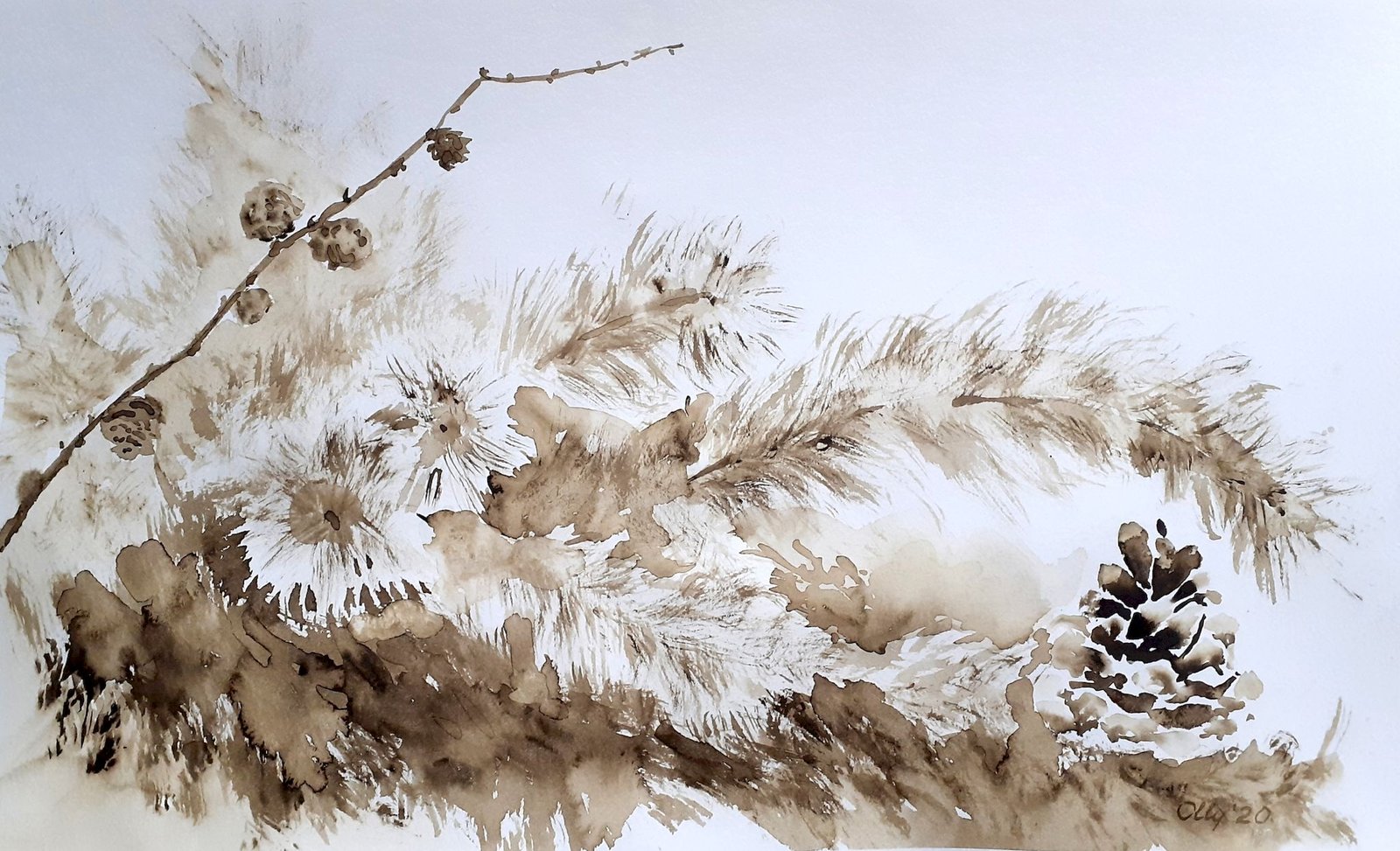
Sepia is a diagnosis — I sometimes say this half-jokingly, but only half. For me, sepia is not simply a monochrome version of watercolor. It is a particular state of concentration and detachment.
When I work in sepia, I usually do not hesitate. I enter the work quickly, almost at once, and come out of it with a finished image. These works are rarely corrected afterwards. Unlike many of my color watercolors, they do not ask for long adjustment, comparison, or return. They happen in one movement.
This is why sepia has become a separate line in my practice.
It is connected to observation, but also to a psychological state in which the subject becomes available without resistance. Grasses, leaves, flowers, branches, figures, water, or fragments of a city can appear through a narrow range of brown tones, but the main thing is not the subject itself. It is the state in which the work becomes possible.
I have the sense that viewers often read this state before they read what is depicted. The image may show plants, a tree, a figure, a street, or water, but what remains is something else: concentration, distance, and a suspended moment of recognition.